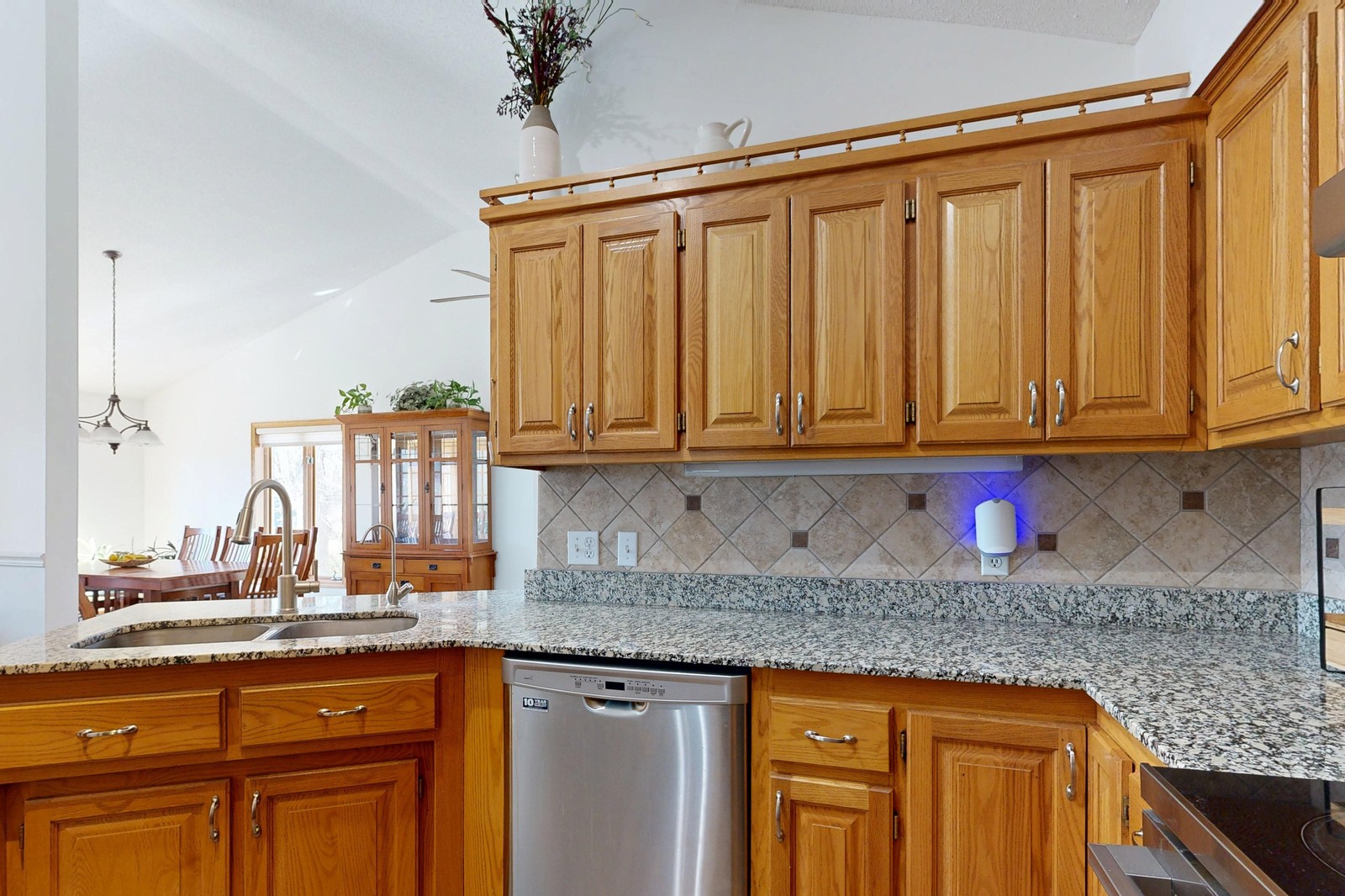
Quick answer: a clogged drain filter at the bottom of the tub is the cause in most cases, and it takes about two minutes to check with no tools required. If the filter is clean, a blocked drain hose or a backed-up garbage disposal are the next most likely causes before anything inside the dishwasher itself needs attention.
Nearly every modern dishwasher relies on the same basic drain path: water collects at the bottom of the tub, passes through a removable filter, gets pushed out by a small pump, and travels through a hose to the garbage disposal or sink drain. A blockage or failure anywhere along that path produces the exact same symptom, a pool of water sitting in the tub when the cycle finishes.
Below are the seven causes we see most often, in the order they turn out to be the culprit, starting with the one you can rule out yourself right now.
Nearly every dishwasher made in the last fifteen years has a removable filter basket at the bottom of the tub that catches food debris before it reaches the pump. When that filter fills up, water has nowhere to go and simply sits there once the cycle ends. This is the single most common cause of a dishwasher that won't drain, and it's also the only cause on this list that's always free to fix.
Signs it's the filter:
Can you fix it yourself? Yes, always start here. Most filters twist out by hand, rinse clean under the sink, and twist back in, no tools needed.
The hose carrying water out of the dishwasher connects to either the garbage disposal or a dedicated air gap fitting on the counter, and grease or food particles can build up inside it over time. If the dishwasher was recently installed alongside a new garbage disposal, there's a specific and often-missed cause worth checking: disposals ship with a knockout plug inside the drain inlet that must be removed before the dishwasher hose is connected, and if it was never removed, water has nowhere to go.
Signs it's the drain hose or a missing knockout plug:
Can you fix it yourself? Partially. Checking whether an air gap is clogged is simple, but accessing the knockout plug or clearing the hose itself usually means removing the disposal's side inlet, which is straightforward for anyone comfortable under a sink but easy to get wrong.
The dishwasher and the garbage disposal usually share the same drain line, so a clog in the disposal backs water up into the dishwasher even though the dishwasher itself is working perfectly. This is an easy one to rule out, since running the disposal for a few seconds is a free test.
Signs it's the garbage disposal:
Can you fix it yourself? Often yes. Running the disposal with water, or clearing an obvious jam with the hex key many disposals include, resolves this without opening the dishwasher at all.
The drain pump is the small motor that actually pushes water out of the tub once the cycle calls for it. A foreign object, a broken glass shard or a label, can jam the impeller, or the pump motor can simply fail electrically after years of use. Unlike the causes above, this one is a genuine component failure rather than something blocking the path.
Signs it's the drain pump:
Can you fix it yourself? Not recommended. Reaching the pump means removing the lower spray arm and filter assembly, and confirming the motor itself has failed, rather than a wiring or control issue, takes a multimeter.
Some dishwasher models use a solenoid-operated drain valve instead of a reversing pump motor to control when water leaves the tub. If that valve sticks closed, water never gets released even though the pump itself is running normally.
Signs it's the drain valve:
Can you fix it yourself? No. Confirming a stuck valve versus a pump or control fault requires testing the valve's solenoid directly, which needs a multimeter and the model's wiring diagram.
This cause is different from a blocked hose because nothing is actually clogged, the hose's physical path is wrong. The drain hose needs either a high loop secured near the countertop or a proper air gap to prevent dirty water from siphoning back into the dishwasher. If the dishwasher was pushed back into its cabinet without checking the hose, or if a high loop was never installed in the first place, water can't drain correctly no matter how clean everything else is.
Signs it's a kinked or missing high loop:
Can you fix it yourself? Often yes. Pulling the dishwasher out slightly to check for a kink, or securing the hose in a high loop under the sink with a zip tie or bracket, is a straightforward fix once you can see the hose's path.
Least common on this list, but it happens: the control board fails to send the signal that activates the drain pump or valve at the correct point in the cycle, even though every mechanical component downstream is perfectly healthy.
Signs it's the control board:
Can you fix it yourself? No. This needs a technician testing the board's output against the pump and valve circuits directly, not a part swapped on a guess.
These two get confused often because both leave standing water in the tub, but the fix is completely different. A true clog, the filter, the hose, or the disposal, usually builds up gradually and often follows a specific greasy or starchy load. A kinked or missing high loop is an installation geometry problem instead: it shows up immediately after the dishwasher was installed or moved, and it's consistent on every single cycle rather than coming and going. If the problem started right after any kitchen work near the sink or disposal, check the hose's path before assuming something needs to be cleaned.
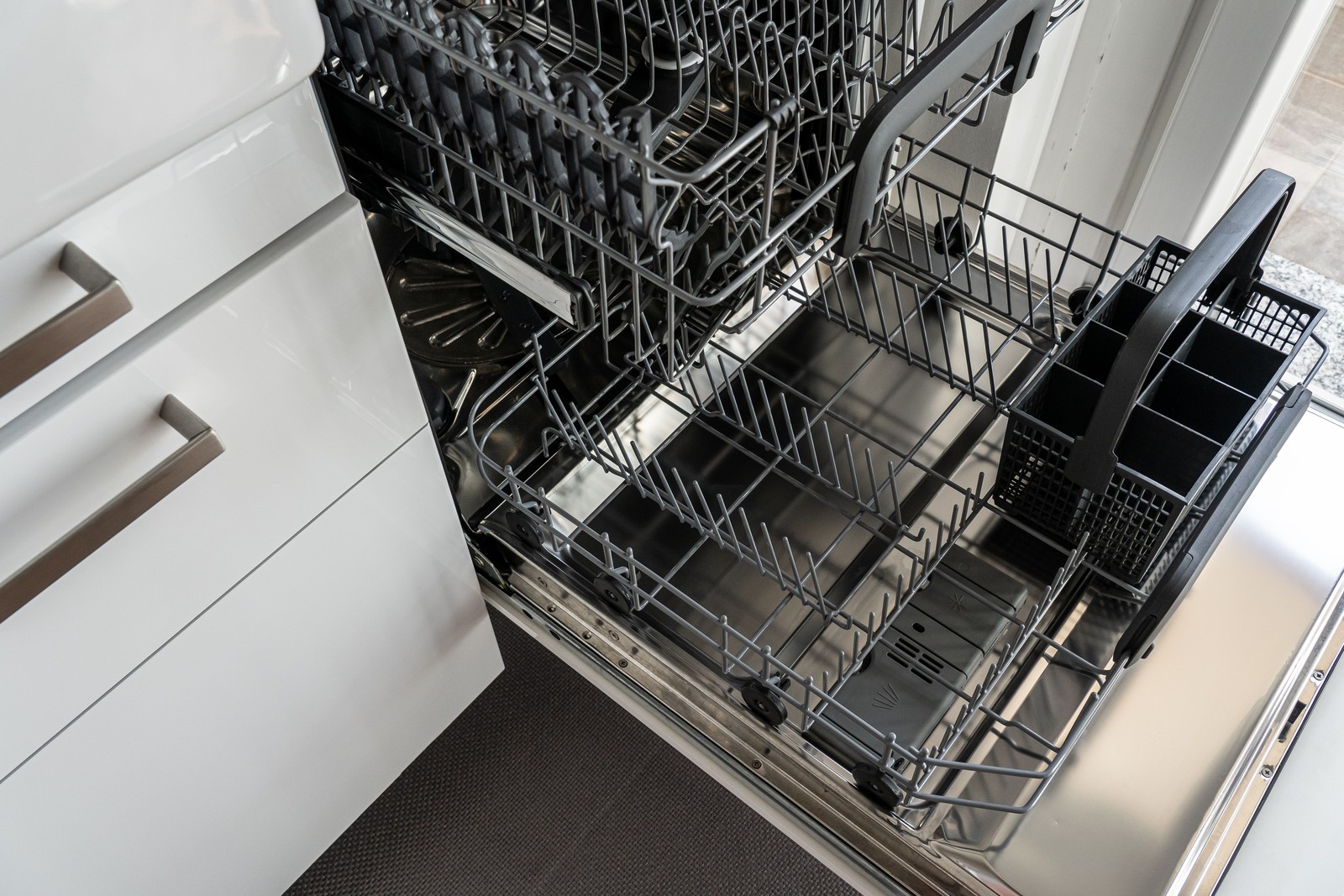
Nearly every drain complaint traces back to the same small area: the filter basket and the drain opening beneath the lower rack. Pulling the rack out and taking thirty seconds to look there resolves more drain calls than anything else on this list.
Tell us whether the filter is clean and whether the sink drains normally, and we'll usually be able to narrow it down before anyone comes out. Same-day appointments across the Inland Empire and San Gabriel Valley.
One safety note: unplug the dishwasher or shut off its breaker before reaching near the pump or drain hose for anything beyond removing the filter.
Era Service repairs dishwashers of every type across the Inland Empire, San Gabriel Valley, Riverside, San Bernardino and Fontana, usually the same day, with genuine OEM parts on the van. More detail on the dishwasher repair service page.
Good to Know
The most common cause by far is a clogged drain filter at the bottom of the tub, which is a free, tools-free fix you can check right now. Beyond that, a blocked drain hose or air gap, a backed-up garbage disposal, or a failed drain pump are the usual culprits, roughly in that order.
Run the garbage disposal, since a clogged disposal on a shared drain line backs water straight up into the dishwasher. If that doesn't help, check whether the drain hose has a high loop or air gap under the sink, since a missing loop is an installation issue rather than a clog and needs repositioning, not cleaning.
A clog usually develops gradually and often follows a specific meal with food debris, while an installation issue, a missing high loop or kinked hose, tends to show up right after the dishwasher was installed, moved, or reconnected, and stays consistent every single cycle rather than coming and going.
Don't run another cycle until the standing water is addressed. Starting a new wash on top of existing water can overflow the tub, and standing water left for days can develop odor and mildew. Bail out the water with a cup and towel before investigating further.
In most cases, yes. The parts behind a drain failure, a pump, a valve, a hose, are inexpensive relative to a new dishwasher. Repair makes the most financial sense on units under 10 years old, which covers the large majority of drain complaints.
Same-day dishwasher repair with genuine OEM parts and a 90-day warranty across the Inland Empire.
See the service →Standing water in the drum after a cycle. The seven causes we see most, and which ones you can check yourself.
Read the guide →The nine most common reasons a fridge stops cooling, and what you can check yourself first.
Read the guide →Same-day service across San Bernardino & North Orange County, backed by a 90-day warranty.
